From Parlour Rooms to Pocket Pastimes: Leisure in the City
City leisure shifts between home, public venues and pocket pastimes. Choose a setting that suits your activity, available space and appetite for company.
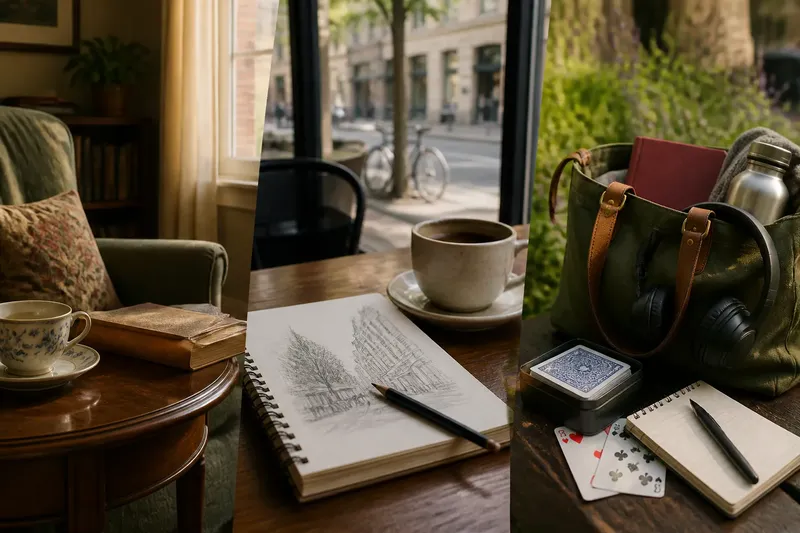
A paperback waits beside the front door while a neighbour pulls a chair towards the window. Both make room for leisure in an ordinary city day, but the place and the object shape what that pause can become. City leisure can unfold in a room set aside for company, a public venue or a pastime carried in a bag.
The useful question is not which arrangement is best. It is what an activity needs, and what its setting makes easy or awkward. Home rooms, public places and portable objects can overlap; none has to replace the others.
A parlour gave leisure a place at home
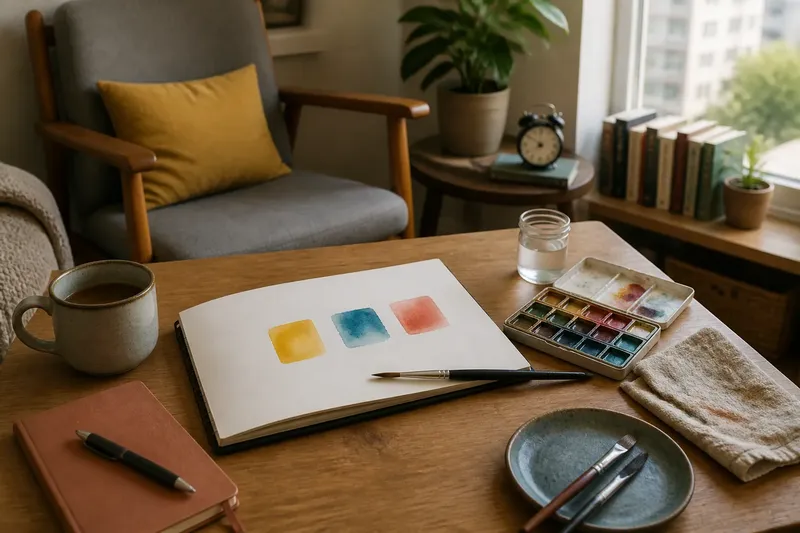
In homes with a parlour or front room, leisure often had a designated address. A piano, sewing basket, card table or bookcase could make room for music, handiwork, games, conversation or reading. Furniture shaped the activity: chairs facing one another invited company, while a cleared table gave a project a surface and a sense of occasion.
A fixed room suited activities that benefited from staying put. A craft could be left ready between visits; a board game could occupy the table; guests could gather without making the kitchen or bedroom the centre of social life. Household routines and customs shaped who could use the room, so its welcome was not the same in every home.
There were limits. Leisure depended on having space, time to prepare it and some control over who shared it. A musical instrument needed room and tolerance for sound. A table in use could conflict with meals or other household tasks. A dedicated place offered continuity, but could make spontaneous activity harder.
The useful idea is not to recreate a formal parlour. A reading corner, a puzzle on a side table or a dining table cleared for craft can make an interest easier to resume. Before setting one up, consider whether the space can be shared and packed away without friction.
Public rooms bring leisure into shared city life
Libraries, cafés, gardens, clubs and other public or commercial rooms offer a change of scene beyond home. They may provide seating, atmosphere or a reason to leave familiar surroundings. A library suits quiet attention; a café can accommodate conversation or solitary reading; a park makes walking and watching city life part of an outing.
These settings can suit someone looking for company beyond their household or a place they do not have at home. They can also give an activity a shared rhythm: a class meets in a studio, a game happens at a club, and a walk begins from a public square. Each venue sets expectations, from noise levels to whether visitors are meant to stay briefly or settle in.
A public room may be busy, inaccessible, costly to use or unsuitable for someone seeking quiet and privacy. Check opening times and local rules. A café is not a study room, and a library may not welcome every kind of group activity. Choose for the venue’s purpose as well as its atmosphere.
Public leisure lets people encounter settings and company beyond the household. Its trade-off is less control: other people, venue customs and surrounding noise become part of the experience.
Pocket pastimes travel with the day
A paperback, sketchbook, deck of cards, small knitting project or audio player can make an interval usable without reserving a room. These objects travel between home, transit and public space. They need not be solitary: cards can invite company, a sketchbook can prompt shared observation, and an audio programme can accompany a walk.
Portable pastimes suit people whose free time happens in changing places, or who prefer to start without arranging a venue. But easy to carry does not mean suitable everywhere. A delicate project may be awkward on a crowded bus; a screen-based pastime may compete with conversation; headphones can draw attention away from surroundings.
Everyday objects also shape the activity. A notebook makes it natural to jot down a thought and stop; a camera encourages attention to framing; a pocket game gives a group something to do while waiting. The object can support an activity, but it cannot create privacy, energy or uninterrupted attention where those are absent.
It is not worth buying a special kit for every possible pause. A familiar book or a pencil and scrap paper may be enough to see whether an activity fits. Choose an object that makes starting simpler without becoming another thing to carry, charge, maintain or remember.
Match the setting to the activity
Home-based leisure offers more control over materials and interruptions. A public venue provides a change of scene and shared atmosphere. A pocket pastime travels easily but usually offers less space and fewer resources. Choose according to the activity and the conditions you want around it.
- Check the surface you need. If the activity needs a stable table, choose a home corner or a suitable venue; if it can happen on your lap, a portable option may work. If neither setting offers enough room, choose a simpler activity.
- Check whether you need quiet. If concentration depends on low noise, choose a quiet room or library; if conversation is part of the pleasure, consider a café or club. If the venue is busy, move or switch to a less sound-sensitive pastime.
- Check how often you need to pause. If the activity can stop and restart cleanly, carry it with you; if it needs an uninterrupted stretch, plan for home or a suitable venue. If interruptions are likely, choose a task with smaller parts.
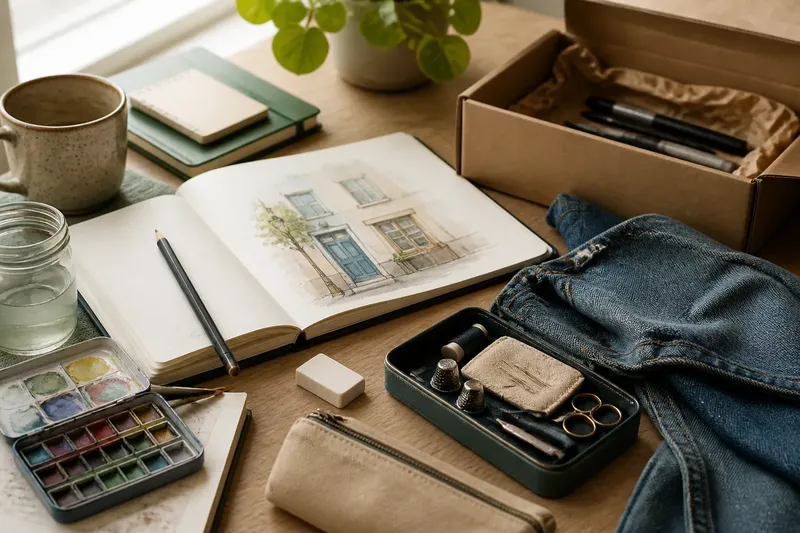
- Check whether materials must stay out. If you need tools ready between sessions, use a shared home surface only if household routines allow it; otherwise, pack materials into a container. If packing becomes a deterrent, simplify the project.
- Check the venue’s purpose and access. If its rules, opening times and access arrangements fit your plan, go ahead; if they do not, choose another place or an at-home alternative.
- Check the social setting you want. If you want company, choose a group activity or a venue where conversation is welcome; if you want solitude, choose a quieter place or a solo pastime. If your preference is uncertain, bring an activity that can be done alone or shared.
Say you want to draw the street and have a small sketchbook, a pencil and a free afternoon, but have not chosen where to start. You first decide that a view matters more than a large surface, so you take the sketchbook to a café with a window seat. If the seat is occupied, you move to a bench in a nearby garden; if both places are too busy, you return home and draw from the window. You make a few quick studies outside, then continue at a table at home. The result is a clear division: public space helps you observe, while home suits a longer session. If carrying the sketchbook proves awkward, the next outing can use a folded sheet of paper instead.
How do rooms and objects shape a leisure choice?
Why did parlours shape leisure at home?
A parlour gave some activities a recognised place and could make hosting or returning to a project easier. Its fixed room and household boundaries also meant access depended on available space, custom and who controlled the home.
What makes a public venue different from home?
A library, café, club or garden offers a shared setting beyond the household, with its own atmosphere and expectations. It can bring a change of scene or company, but visitors have less control over noise, access and how the space is used.
Are pocket pastimes always more flexible?
They are easier to carry, but their usefulness depends on the activity and setting. A compact object may be inconvenient in a crowded place or too limited for work that needs room, tools or concentration.
How can I choose between a room and a portable activity?
Start with what the pastime needs: a stable surface, privacy, conversation, materials or the ability to stop and restart. Choose the setting that supplies the most important condition without adding a burden that would discourage you from beginning.
Let the activity decide how much space it needs
City leisure can belong to a room, a public venue or an object carried through the day. A home setting can make activities visible and easy to resume; public venues put leisure among neighbours and strangers; portable objects allow small pastimes to accompany movement through the city. Each arrangement reflects its surroundings and the choices available to the people using it.
For city leisure, name the part of an activity that matters most: a quiet corner, a shared table, a change of air or the freedom to carry on elsewhere. That answer can point to a room, a venue or a pocket-sized pastime, and it can change from one occasion to the next. Before heading out, check that the place suits the activity and that the object you bring will make starting easier rather than adding another task.