The Half-Hour Window: Why a Small Leisure Slot Needs a Clear Starting Point
A half-hour leisure slot can disappear into choosing and setting up. Pick one clear first action so you can begin promptly and spend more time doing it.
You have half an hour before dinner, and a sketchbook is on the table. Instead of drawing, you wonder what to draw, look for a pencil, then check your phone. A half-hour leisure slot works better when its first action is decided before the free time begins.
The aim is not to schedule every minute. It is to remove the small decisions that stand between you and the activity. Choose a simple action you can start straight away, and let the rest of the slot remain flexible.
A half-hour leisure slot stalls when the choice is too broad
“Do something creative” leaves too many doors open. You might consider drawing, writing, baking or learning a song, then use the available time deciding which one feels right. The cause is not a lack of ideas; it is having to compare them at the moment you meant to begin.
Before the slot, choose one activity and one modest first action. “Write a few lines” is still open-ended, but “open the notebook and describe the view from the window” gives your hands somewhere to start. If you want options, keep a short list and choose from it in advance rather than browsing through possibilities during the break.
Setup decisions can consume the easy part of the slot
A leisure activity may have several small preliminaries: finding a place to sit, fetching materials, opening an app or clearing a surface. Each one seems minor, but a string of them can make starting feel like another task. This often happens when the first action depends on equipment or information that is not ready.
Match the activity to what is already within reach. Leave the book beside your chair, keep a pen with the notebook, or save the music lesson you plan to practise. If preparation is needed, do it before the free window starts. Keep the setup proportionate: arranging an elaborate workspace for a brief sketch is usually not worth the effort.
An unclear stopping point makes starting feel risky
Some people delay beginning because they imagine the activity will take longer than the time available. A puzzle, a chapter or a craft project can seem like something that must be finished once started. The cause is treating a short leisure slot as a complete session rather than a useful portion of one.
Choose an action with a natural pause. Read a few pages, work on one section of a puzzle, or practise a passage rather than aiming to complete the whole activity. You can also decide where to leave things: bookmark the page, put the pen down beside the notebook, or make a quick note of the next move. That makes stopping feel planned rather than abrupt.
Phone interruptions can break the starting rhythm
A notification can turn a quick check into a string of unrelated decisions. The slot then becomes fragmented, and returning to the activity takes another effort. This is especially noticeable when the activity itself is on the phone, since messages and entertainment sit close together.
Choose a simple boundary that suits the activity. Put the phone out of reach for a paper book, or open the specific audio or lesson you need before beginning. If you are using a phone-based hobby, close unrelated tabs and silence non-urgent alerts where appropriate. The point is not to make the break strict; it is to avoid inviting a fresh choice every few minutes.
What should the first action solve?
How do I choose an activity for a short break?
Choose something you can enter without a long setup or a large commitment. A few pages of a book, a quick journal entry or a short stretch of a creative project can all work if the materials are ready.
What if I cannot decide what to do?
Write down a few activities you genuinely enjoy, then select one before the next free window. Keep the list brief enough to make choosing easy, not another project to maintain.
Should I plan the whole half hour?
No. Decide only the first action and, if useful, a natural stopping point. Leaving the middle open allows the activity to develop without making the break feel like an appointment.
What if the time gets interrupted?
Choose a point where you can pause without losing your place, and leave a cue for resuming, such as a bookmark or a note beside the materials. If the interruption takes the rest of the slot, you have still made the next start easier.
A ready-made opening can carry a short session
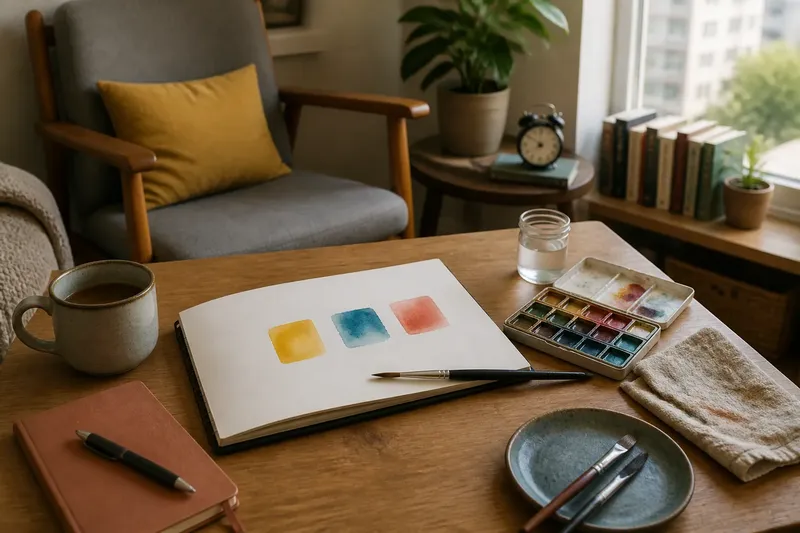
Say you have a half-hour gap after arriving home and want to practise watercolour. Before the gap, you place a sketchbook and a brush beside the watercolour set, then decide that the first action is to paint three loose colour swatches. When the time opens, there is no need to choose a subject or search for supplies; you can begin with the swatches and continue if the session allows.
Use the same principle for a solo or shared activity: name the first visible action, make its immediate materials accessible, and keep the scope small enough to pause comfortably. A useful starting point for a half-hour leisure slot should fit in one plain sentence. Write that sentence somewhere you will see it, and let the rest of the time belong to the activity.