The Hobby Gear Trap: Why More Equipment Does Not Make More Time
Hobby gear can crowd a small flat and complicate creative plans. Choose a compact, reusable kit that suits the activity, fits your space and earns its place.
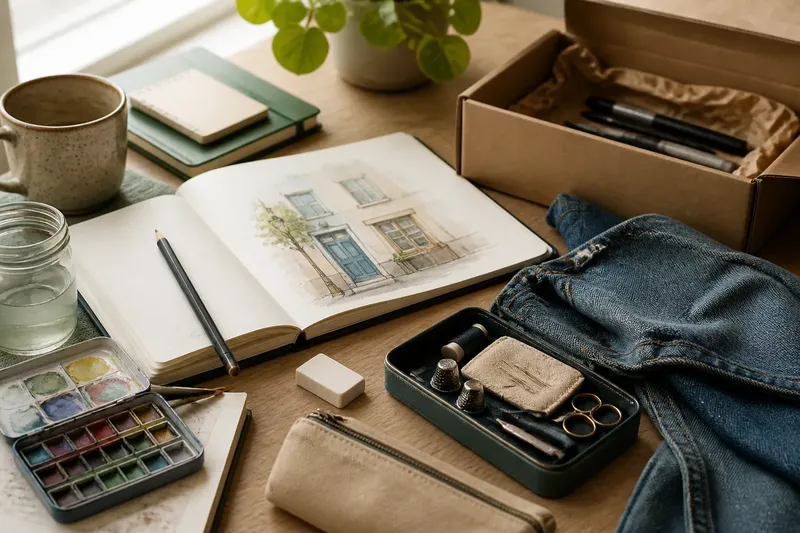
The sketchbook is open on the kitchen table, but a new set of pens is still in its delivery box. Hobby gear can take over a small flat before you know which tools suit your creative plans. A compact, reusable kit keeps the focus on making something, not assembling a collection.
Choose gear for the activity you want to make
Start by naming a specific piece of work, not an idealised version of a hobby. “Draw a street corner” points towards paper and a pencil; “learn art” can lead to buying supplies for techniques you may never use.
Match the basic materials to the task. For a simple drawing, use a pencil, eraser and paper. For visible mending, choose a needle, thread and a garment that needs repair. If the activity involves specialist equipment, check the maker’s instructions or ask a reputable instructor what is essential before improvising.
After making something, note any material that changed the result or made the process awkward. A paper surface that does not suit wet paint is a more useful observation than a general urge to buy a professional set.
Keep the kit small and adaptable
In a compact home, useful supplies should earn their storage space. A ruler can support sketching and lettering; small scissors can trim paper or thread; a plain notebook can hold both ideas and practice.
Versatile does not mean buying a gadget that claims to serve every possible purpose. Choose a few dependable items for the work you actually do. A small tin with needles, thread and a thimble may suit mending better than a large craft box crowded with decorative extras.
Say you want to try watercolour at the kitchen table, and you have a small pad, a compact paint set, one brush and a clean jar. You paint a simple row of windows, then notice the brush leaves marks too broad for the narrow frames. Your next decision is specific: try a finer brush, borrow one, or change the subject to suit the brush you have. The result is a clear choice about the work, rather than a purchase based on a vague wish for more equipment.
Store materials for the way you use them
Keep the current supplies together in a shallow box, fabric pouch or sturdy envelope. Pick a container that fits the materials and can be put away without taking over a shared table.
Consider the full journey from storage to use and back. If you carry the kit to a café or a shared living room, choose a container that closes securely. For paint or glue, work on a washable surface, prevent spills and follow the product label and maker’s instructions for handling and storage.
It is not worth the effort to organise every possible future project before you have made one. Matching labels, elaborate drawer dividers and specialist storage can become a separate hobby. A single container for the supplies you use is enough.
What should you buy for a hobby, and when?
Can household materials work for a first project?
Often, yes. Use clean, suitable items already at home, such as scrap paper for collage or a garment needing a small repair. Choose purpose-made materials if a substitute makes the task uncomfortable, unreliable or unsuitable.
How do you decide which tool to add?
Identify a specific limitation from the work you have made, then consider the smallest tool that addresses it. “The paper buckled under wet paint” gives you a clearer direction than “I need a proper set”.
Is a beginner’s kit a sensible purchase?
It can be, if the kit contains the tools for the activity you intend to try and each item has a clear use. Check the contents before buying; a bundle is poor value for your cupboard if most of it does not suit your work.
What if the hobby needs specialist equipment?
Some activities call for tools suited to the task, and a household substitute may not be suitable. Check the manufacturer’s guidance or consult a qualified professional when the technique or safety requirements are specialised.
Check each item before adding it
Use these checks when deciding whether a new tool belongs in your kit. Each one pairs an observation with a decision, so you can choose an alternative if the item does not solve a real problem.
- Check whether a tool addresses a difficulty you have actually met; if it does, compare suitable options, and if it does not, wait rather than buying for an imagined problem.
- Check whether the tool suits the project you plan to make; if it does, consider adding it, and if it does not, choose materials for a more suitable project.
- Check whether you can store the item with your current kit; if you can, keep it together with the supplies, and if you cannot, borrow or share one instead.
- Check whether an item you already own can do the job; if it can, use it, and if it cannot, look for a tool designed for that task.
- Check whether the item is useful for more than one activity or will be used up; if either applies, weigh it against your storage space, and if neither applies, consider borrowing it.
- Check the instructions for any material with handling or storage requirements; if you can follow them in your home, proceed as directed, and if you cannot, choose a safer, suitable alternative or seek qualified advice.
Before buying, name the problem the item solves and decide where it will live. If the need remains uncertain, borrow the tool or use a shared workshop where available. Hobby gear should support the work you want to make; the best next addition to your kit is the one with a clear purpose and a place to go.